

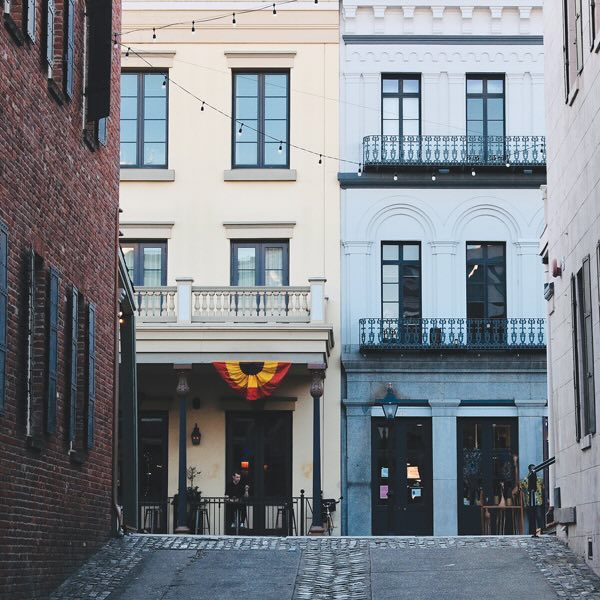
In my family, only one person likes Old Sacramento. That’s me. I enjoy the wooden sidewalks, wrought iron balconies, tourist traps, train sheds and steamboat docks.
My feelings for Old Sac are nostalgic. I’m the only one in the family old enough to remember what Front and Second streets looked like six decades ago.
In those days, Old Sac was the West End. Residents were derelicts, bums, drifters, tramps, winos. They loafed in the shade, weary from picking fruit, drunk.
The West End made an impression on me as a kid. A strange, bleak place to avoid.
That was 1967, when Interstate 5 was under construction. Concrete pillars and scaffolding filled the blocks where Third Street stood.
Wandering Old Sac the other morning, I wondered what would have happened if the state park, railroad museum and freeway never happened. If Old Sac stayed the West End, a containment zone for people down on their luck.
I wondered whether the city’s current homeless predicament might have been avoided if authorities saved the West End in 1955, when officials drew lines around 75 blocks Downtown and declared the area ripe for slum clearance.
I wondered how Sacramento’s unhoused crisis might look today if cheap saloons, rescue missions and flop houses that filled the waterfront survived and provided rooms and services for troubled people who lack resources. Would things be different?

In Sacramento, homelessness is as enduring as Sutter’s Fort.
Unhoused people arrived with the Gold Rush. In 1850, homeless settlers fought local militia over housing demands. Riots erupted in the West End and Brighton, today’s Tahoe Park. Five people died.
Despite its decline in the late 1920s, the West End was home to individuals with no fixed address.
The waterfront housed thousands of unemployed people during the Great Depression. From World War II into the 1960s, the neighborhood provided cheap beds, hot meals and collegiality for men with temporary jobs, mostly in agriculture. West End religious missions gave salvation to alcoholics and drug addicts.
Redevelopment crushed the waterfront’s ecosystem of housing, sustenance and services. But the ecosystem wasn’t redevelopment’s real target.
The goal was to destroy Japantown and Black and Latino neighborhoods between the Sacramento River and Seventh Street, L and P streets. The aim was to fill Capitol Mall with office buildings and retail stores.
City officials and the Bee pushed hard for race-based redevelopment, even after voters refused to support a slum clearance bond in November 1954. Nothing could stop the bulldozers.
The local redevelopment director, Jerome Lipp, explained City Hall’s position. He pointed to a map of Japantown and said, “It was one of the worst slums in the country. The filth was something you can’t even conceive.”
Coincidentally, the neighborhood was 64% minority, including 30% Asian and 21% Black.
Demolition began in January 1957, when a Japanese resident’s home was bulldozed at Sixth and Capitol. Two Black-operated nightclubs on Sixth Street, MoMo and Zanzibar, were soon flattened.
Cheering the wreckage was Gov. Goodwin Knight, who said, “Sacramento has passed the threshold of a magnificent promise for the future.”
After neighborhoods south of Capitol Mall were demolished, wrecking crews moved to the West End waterfront. Historic structures from the 1850s filled the streets. Transient hotels, brothels, barrooms, restaurants, dilapidated or suitable for rehabilitation. Down they came.
Between 1958 and 1975, the city destroyed 20 historic buildings around Old Sac. Eighteen others were saved—today’s Old Sac. West End population, J to P streets, fell from 4,467 to 377. Interstate 5, once proposed for West Sac, opened in 1975. The West End was finished.
After my last visit to Old Sac, I found a 1960 quote from Nathaniel Colley, the city’s first Black lawyer. Colley foresaw today’s homeless situation.
He said, “It seems almost immoral for a government to go in and tell a slum dweller we’re going to clear you out, then have him go out and face a closed housing market.”
R.E. Graswich can be reached at regraswich@icloud.com. Follow us on Facebook and Instagram: @insidesacramento.