From the Publisher’s Desk
Baseline Winner
Jenson Brooksby is worth watching this summer. Look for him at Wimbledon and the U.S. Open tennis tournaments.
At the 2021 U.S. Open, Brooksby played Novak Djokovic, one of the world’s best players. Djokovic won in four sets, but Brooksby took the first set 6-1. At age 21, Brooksby showed courage and resolve on the center court at Arthur Ashe Stadium.
The day after that match, I learned Brooksby was from Sacramento. A woman I played tennis with told me she and her husband purchased Brooksby’s family home in Sierra Oaks. When they bought the house, they noticed dents in the garage door, evidence of young Jenson’s practice sessions.

Paper’s Weight
Inside Sacramento publishes 12 tons of local newspapers each month with our 80,000 printed copies. Our commitment to community print is among the most substantial in Northern California.
We also provide digital content, but our digital reach is about 25% of the print version. We’re bullish on the printed page.
Inside manages to buck the trend of printed words replaced by digital content. Our local advertising base gives us a tremendous advantage. I’m grateful for every advertising dollar that allows you to hold this free publication each month.
When I meet readers, they often tell me they love getting our top-quality local news in print. Many say it’s the only print product they read. Some enjoy Inside so much with their coffee they stretch out the experience the whole month.

Progress Finally
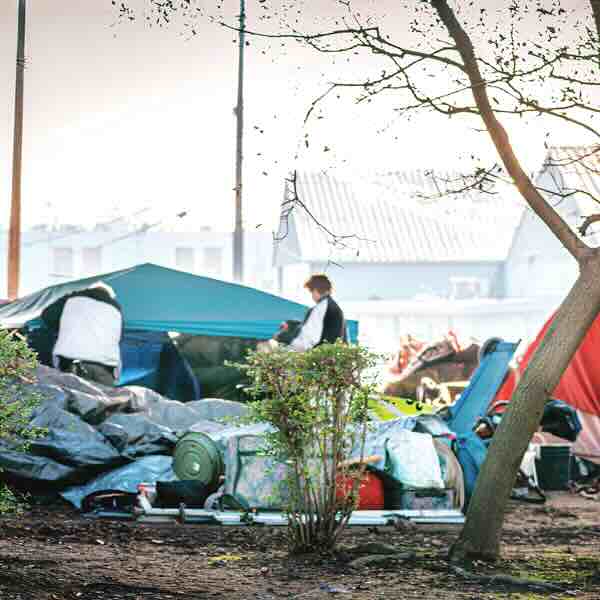
No other local news outlet has covered the unsheltered crisis better than on our pages, a commitment we made in 2019. Sadly, most of the news has been grim if not hopeless.
But in recent months, we’ve seen changes that might turn the tide.
“Americans With No Address” is a new, compelling documentary on the national unsheltered crisis. I watched it on Amazon Prime and urge you to see it.
Produced by Robert Craig Films, the work dives deep into homelessness. The film was created from a three-week bus tour—starting in Sacramento—across 20 cities in 18 states. The filmmakers explore causes behind homelessness. And they find solutions.
Good Riddance
Mayor Kevin McCarty took a bold step at his first full City Council meeting in December. He voted with five colleagues to fire City Manager Howard Chan.
We don’t know if McCarty led the revolt, or if the list of failures under Chan and former Mayor Darrell Steinberg prompted the council to remove the city’s chief operating officer. Councilmembers offered no explanations other than vague remarks about fresh starts.
There was only the final vote—6–3 against extending Chan’s contract for a ninth year. Rick Jennings, Lisa Kaplan and council newcomer Phil Pluckebaum voted to keep Chan. It would be nice to know the motives of all nine members. Their reasons would be instructive. But we got nothing.
Welcome Home
Last year’s elections showed city voters are almost divided over how we want municipal leaders to address local challenges.
Mayor Kevin McCarty and Councilmember Phil Pluckebaum both won tight races. They bring fresh perspectives to City Council, along with newly elected Councilmember Roger Dickinson.
Whether your candidate won or lost, we should all hope and pray the new council can tackle the problems facing our city.

Tailor Made
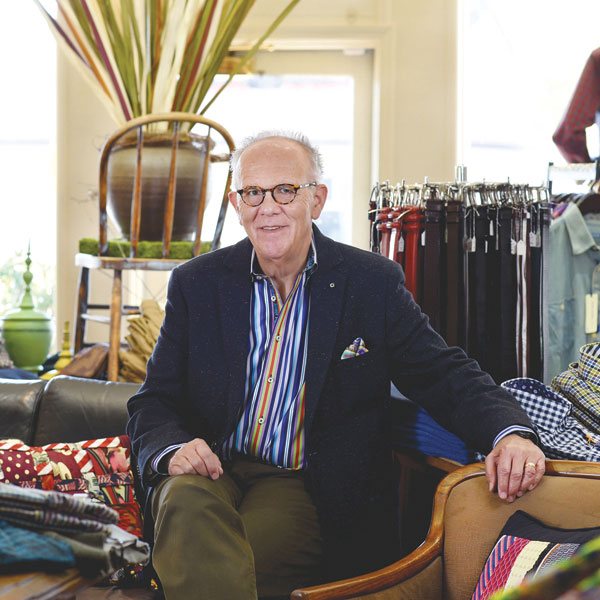
Steve Benson, one of Sacramento’s finest and most beloved men’s clothing store owners, died in September from complications of the motor neuron disorder ALS, or Lou Gehrigs’s disease. He was 76.
Steve founded S. Benson & Co. fine men’s clothing in 1995. The East Sac shop was a high-end boutique with exceptional style and inventory.
Treasured for his old-school service, Steve was expert at custom-fitting clients or helping choose ready-to-wear apparel. Fathers and sons became generational clients.