

Missing In Action
Front Street manager is no-show at commission meetings
By Cathryn Rakich
January 2026
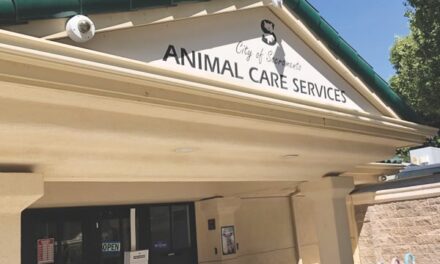
The dais seat reserved for the head of Front Street Animal Shelter has been occupied by someone else at the past two Animal Wellbeing Commission meetings.
Front Street Manager Phillip Zimmerman has been absent. Apparently, he’s not ill or out of town. He’s a lame-duck leader who chooses not to attend.
Zimmerman posted on social media he plans to retire in May. Meanwhile, he’s still on the city payroll, but often missing in action.
Ryan Hinderman, Front Street’s communication and customer service manager, has been Zimmerman’s substitute. “It’s something I offered to do out of interest,” Hinderman tells the commission. “It also gives Phillip a chance to work on other competing work priorities.”

Choosing other priorities is a slap in the face to the 13 commissioners who are responsible for harnessing City Council support to improve the municipal animal shelter.
“Our meetings are significantly hindered by not having him here to answer questions,” Commissioner Samantha Christie says.
Perhaps Zimmerman does not want to endure ongoing criticisms by community members who show up at every commission meeting. Under Zimmerman’s leadership, stray animal intake and euthanasia have skyrocketed. Spay/neuter takes a backseat.
Healthy, often unaltered animals are turned away under his “community sheltering” and “reduced intake” policies, only to reproduce at alarming rates, and suffer and die on the streets.
As of mid-December, Front Street took in 7,685 stray animals in 2025.
Maybe Zimmerman is tired of being asked for euthanasia statistics. His past reports highlighted adoption events, community vaccine clinics and staff hires. Not how many animals were killed in his shelter.
By mid-December, the shelter euthanized 1,700 dogs and cats in 2025, averaging 35 a week.
“I’ve gone on and on about euthanasia numbers,” Commissioner Paula Treat says. “A lot of people…want to know more about what’s going on at the shelter. And Phillip not showing up is not good enough for me.”
Perhaps Zimmerman doesn’t want to discuss the thousands of grant dollars for spay/neuter he received two years ago but never spent.
Maybe the shelter manager wants to avoid explaining why recommendations from last year’s city audit have not been implemented.
The audit found unfinalized policies and procedures, a lack of high-volume community spay/neuter, hundreds of unanswered calls for animal control, uncollected revenue-generating fees, and low employee morale and engagement, among other problems.
City Council Member Roger Dickinson, who chairs the city’s Budget and Audit Committee, says the audit “speaks to almost every aspect of operation of the (animal care) division. And that’s of deep concern.”
Responding in April to the audit’s findings and recommendations, Zimmerman said policies and procedures were being drafted and would be submitted to the city’s human resources department by July.
The city is still waiting.
Instead, a Request For Proposal is underway to hire out the work. This despite numerous offers by commissioners and community experts to assist with policy drafts free of charge.
Hiring an outside agency “makes zero logical sense,” animal advocate Elyse Mize tells the commission. “Wouldn’t it make more sense for the people doing the job daily to give us the policies and procedures? Hopefully they know them.”
Commissioner Douglas Snell says, “We offered help to write the policies. We’ve had members of the public offer to write the policies. Now the plan is to farm it out to some unnamed organization when you have people here, volunteering, asking to get involved?”
The audit found the shelter is without sufficient animal control services. Nine months after the audit, nearly 400 calls for animal control are still pending.
The audit calls for additional veterinary staff to provide timelier spay/neuter for shelter and community animals. Due to Front Street’s limited space, the audit suggests a temporary prefabricated building for high-volume sterilization surgeries.
Zimmerman claims a temporary building won’t provide enough additional capacity for increased spay/neuter. He says the city’s budget deficit won’t allow new veterinary hires. Yet he proposes $500,000 in the 2026/27 budget for 10 mobile spay/neuter clinics.
Dickinson asks, “How do we do a better job of preventing unwanted animals? How do we reduce euthanasia of animals? How do we take better care of the animals in our custody?”
Easy answers: New shelter leadership.
For previous reporting on Front Street Animal Shelter, visit insidesacramento.com/civic-dashboard.
Cathryn Rakich can be reached at cathrynrakich@gmail.com. Follow us on Facebook and Instagram: @insidesacramento.