

I got an email from someone who thinks I’m too critical of the Kings. A reader named Debbie Sharp writes,
“You must thrive on negativity! Some of us are hardcore Kings fans! Apparently not you.”
I’ve heard these complaints since 1984 when I went to Kansas City to investigate Kings fans who were about to lose their basketball team.
I found a Missouri Kings fan club and talked to eight or nine people upset about the franchise moving to Sacramento.
The story ran in the Bee. It concluded that beyond a tiny knot of die-hards, Kansas City sports fans didn’t care if the Kings blew town.
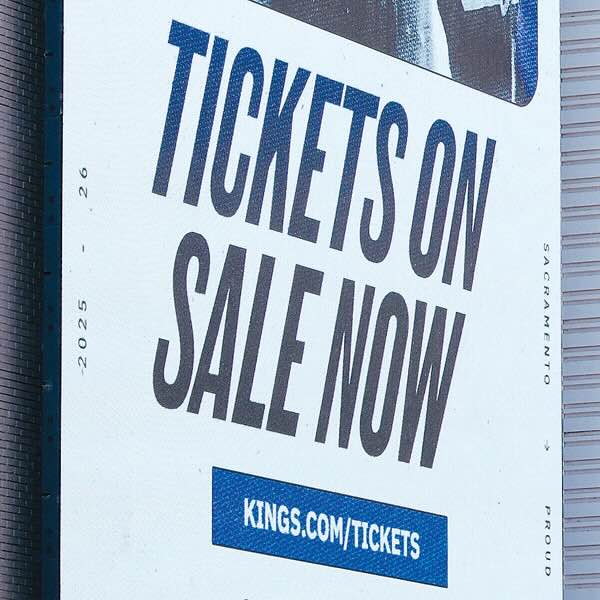
I visited Kansas City saloons and asked about losing the Kings. Beer drinkers were baffled, wondering why I was there. They wanted to discuss baseball and football.
The story landed with a thud in Sacramento. Readers accused me of thriving on negativity.
Seeing how my outlook on the Kings hasn’t budged in 42 years, it’s fair to say I’m negative.
But rather than debate the value of critical reporting or argue why sportswriters shouldn’t be cheerleaders, let’s fantasize about a nightmare.
In this terrifying dream, a sportswriter is assigned to cover the Kings—but not the Kings we know. Not the Kings who have fallen flat since leaving Kansas City in 1985.
These nightmarish Kings are good. Consensus picks to dominate the Western Conference and win the NBA title. Feared and envied from Boston to Los Angeles.
In this nightmare, our sportswriter is expected to help hardcore Kings fans adjust. After two generations of cheering for doormats, fans must recalibrate for life at the top. It’s tricky.

The sportswriter visits San Francisco and Oklahoma City, and researches what happens when teams win championships.
He interviews public safety experts. Imagine the enthusiasm on the K Street mall the night the Kings clinch the NBA Finals. He talks to solid waste crews and insurance agents responsible for damage and cleanup.
Reporters love academics who enliven their journalistic theories. Our sportswriter finds a professor who specializes in sports economics and asks what happens to ticket prices when teams win big.

The professor explains the law of supply and demand. She postulates that in even a town with limited media exposure and modest corporate muscle, what goes up never comes down.
Our sportswriter gathers data on ticket-price gouging that follows NBA championships.
Next stop is a psychologist who understands cognitive bias. People who spend colossal chunks of time watching sports often believe they are smarter than men and women who coach and play the games for a living. Psychologists call this the Dunning-Kruger effect.
The psychologist explains how Dunning-Kruger isn’t unique to sports fans—many motorists and home chefs display similar behavior.
But here’s how things go sideways once the Kings start winning.
For 41 seasons, Kings fans formed a tough, resilient fraternity. They reveled in stubborn faith. They wore baby blue throwback jerseys. They knew the difference between Phil Johnson, Steve Johnson, Eddie Johnson and Kevin Johnson.
None of this proved they were experts. But don’t tell them that.
Once the Kings confirm their NBA greatness, the number of people who claim hardcore fan status explodes. Kings gear spreads across the region.
People who can’t pronounce “Vlade Divac” swear they are lifelong Kings fans. Parents swaddle newborns in DeMar DeRozan onesies.
Local media newcomers see cosplay as evidence of a city banding together over sports. Having thrived on negativity since 1984, I know better.
True hardcore Kings fans despise bandwagon jumpers. Pretenders wreck the celebration. They hitch free rides on the legacy without the downpayment in tears.
Fights erupt whenever a hardcore fan asks a neophyte, “Where were you when the Kings lost 43 straight road games?”
That’s my nightmare.
Back in reality, there’s no need to worry. The Kings will get better when fans demand improvement by withholding support. Or maybe not. Don’t ask me. This is one sportswriter who loves losers.
R.E. Graswich can be reached at regraswich@icloud.com. Follow us on Facebook, X and Instagram: @insidesacramento.