

Take A Hike
How a little walk brings big health benefits
By Dr. Justin Altschuler
February 2026
Sitting down to write this, I struggled with ideas. I stared at the blinking cursor, feeling it mock me. I wracked my brain for something—anything—to hold onto.
Several half-formed ideas raced around my head, but grabbing one and putting it down into words was elusive. Feeling stuck, I got up, put on my coat, and took a walk around McKinley Park.
It was late afternoon. The light was fading, the wind blowing. By the time I returned a half-hour later, I had three coherent, almost finished essays floating in mind.

When we talk about walking, it’s usually in the context of gentle exercise. In fact, walking is a well-studied tool that benefits the mind as much as the body.
From reducing anxiety to improving cognition, walking is recognized as a solvent for challenges. There’s even a branch of meditation called “walking meditation,” the practice of simply moving mindfully.
Despite this, walking as a tool to help us get unstuck is underused. Part of the reason is that it doesn’t naturally occur—it’s outside our usual repertoire for addressing challenges.
Our built environment doesn’t help. We spend most of our time sitting in cars, at desks or in front of screens. When movement isn’t habitual, the benefits are hard to experience and it’s difficult for us to remember movement is a useful tool.
We tend to forget about walking as an option to help us get unstuck. Once we sit down to tackle a problem, we convince ourselves that staying put is the way to make progress.
Urgency, stress and habit narrow our field of view until the simplest reset disappears. Many of us live and work in spaces designed to keep us seated, which means walking rarely enters our problem-solving toolkit.
When we do remember to walk, we underestimate how powerful it can be. A short walk can shift mood, perspective and cognitive flexibility far more quickly than we expect. Most of us have experienced this. But in the moment, we often underestimate how beneficial it can be.
Stress makes things worse. When we feel overwhelmed, our minds constrict around the immediate problem. Every delay feels unacceptable. In our minds, the value of a walk gets discounted. We tell ourselves it probably won’t help much, that it’s an option rather than essential for clear thinking.
The benefits of walking extend beyond work. When we are angry with someone, pausing and taking a walk can calm the nervous system and allow us to feel less trapped in our emotions.
The same improvements in cognitive flexibility we experience at work apply when we feel trapped in relationship problems. When trying to make major life choices, a walk can provide clarity.
For people working to break habits—cravings for substances, food or even our phones—walking offers a benefit. A walk is rarely a distraction or a way to “turn off” difficult feelings. Instead, it creates a little space to notice them without being consumed by them.
This shift in our relationship with thoughts and feelings allows us to work with them rather than deny them.
Walking outdoors provides a reset that’s hard to replicate inside. Light, wind and open space refresh attention. Physical motion matters, too. Rhythm and movement steady the nervous system, lower tension and give thoughts room to flow.
Walking is a form of embodied thinking. Even when we don’t consciously solve anything while walking, insight often emerges. Our perspective naturally shifts when we move through space. That shift can make problems feel smaller, more manageable or just different than when we were trapped in place.
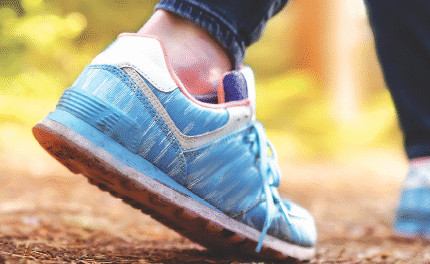
Taking a walk is a concrete tool to help get through stressful times. The hardest part isn’t putting on your shoes. It’s remembering that walking is an option when we feel we don’t have any.
Dr. Justin Altschuler, a physician certified in family practice and addiction at Sequoia MD, can be reached at (916) 668-7164. Follow us on Facebook, X and Instagram: @insidesacramento.