

Play For Keeps
Volunteers save the day, but parks need more
By Jeff Harris
November 2026
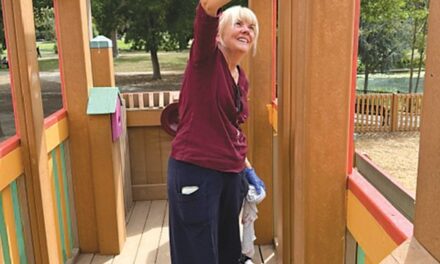
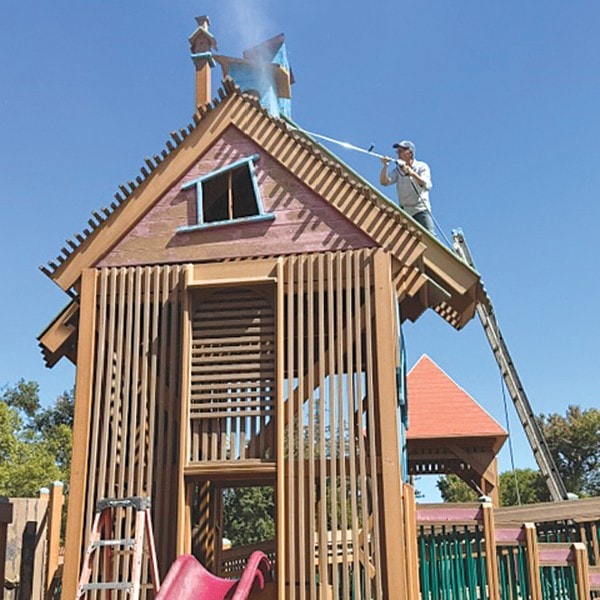
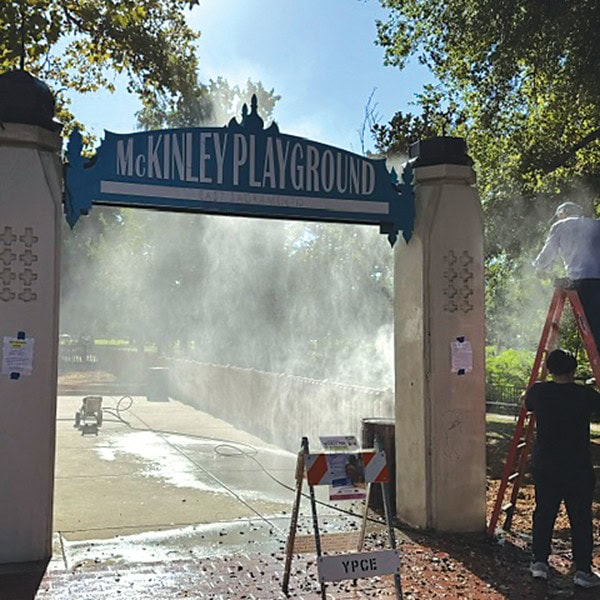
The first day, volunteers ages 6 to 73 spent six hours weeding, pressure washing, adding fresh sand and prepping for paint.
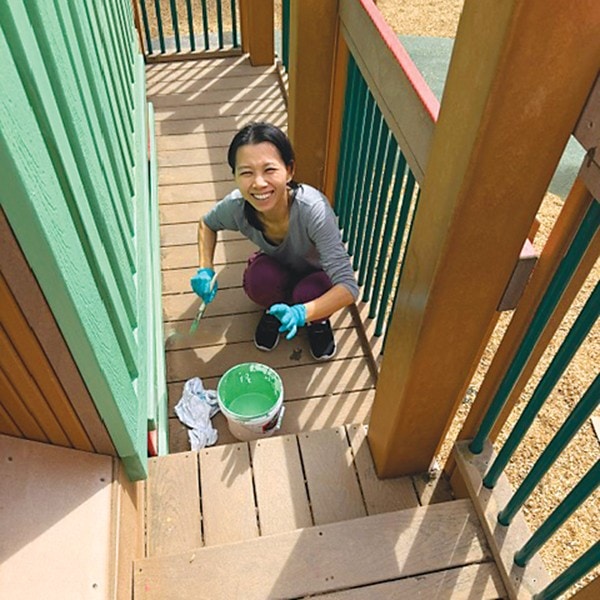
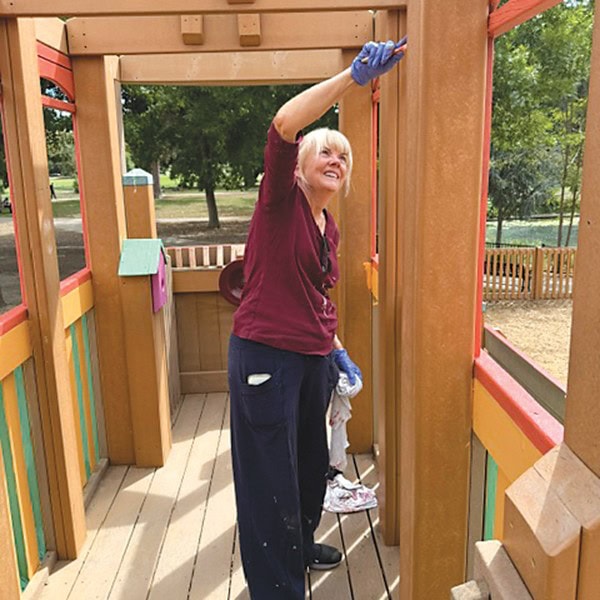
The second day was all about color. For seven hours, volunteers moved across the playground with brushes, buckets and rags.
By the weekend’s close, faded walls stood bright. The play train regained its whimsical colors. Towers, railings and structures sprang back to life, refreshed.
McKinley Playground was always a community project. Residents built the site. After a 2012 arson fire, the community rallied, raised money and rebuilt. Reconstruction took 10 days and included 2,000 volunteers.
Parks are fundamental to our environment. They aren’t an afterthought, getting attention after other obligations are met.
Community parks are where children play, families gather, people exercise and neighbors interact. Well-maintained parks improve neighborhoods. Poorly maintained parks do the opposite.
Sacramento’s financial problems are serious. The City Council adopted its latest budget after confronting a $66.2 million deficit. Expenses grow faster than revenue, forcing service reductions.
Parks can’t escape these pressures.
Shannon Brown, assistant director of Youth, Parks & Community Enrichment, tells me Sacramento has approximately $60 million in unfunded maintenance needs. That’s $40 million for parks and $20 million for swimming pools.
Meanwhile, the department is responsible for 243 parks along with parkways, bike trails, natural areas and open space. Park usage increases and the maintenance workforce declines.
Every budget involves choices. Sacramento can’t fund every worthwhile program. A structural deficit makes choices harder and priorities more important.
The City Council decides where to spend general fund dollars. In recent years, Sacramento made new and expanded commitments to homelessness, children and youth, economic development, public safety oversight, police services and employee compensation.
Many serve legitimate purposes. But funding one priority leaves fewer dollars for others.
Parks shouldn’t always finish last in the competition.

Such partnerships should be encouraged. But supporting the city park workforce shouldn’t mean replacing it.
Volunteers can’t maintain irrigation systems, trim trees, inspect equipment, repair electrical systems or address a $60 million maintenance backlog. Neighborhoods can’t provide unpaid labor to stop public properties from deteriorating.
McKinley Playground sits in a neighborhood with a tradition of civic involvement. Not every community can organize 80 volunteers for a weekend.
The city needs volunteers. It also needs employees to maintain public assets. The solution may require the City Council to reduce spending and consider outsourcing and managed competition to achieve savings.
Paint fades. Irrigation fails. Restrooms deteriorate. Play equipment wears out. Small repairs ignored become expensive problems.
Sacramento’s 243 parks represent decades of public investment. They provide direct and daily service to taxpayers.
McKinley volunteers defined community pride. They donated two days of hard work and left a beautiful playground filled with color.
Celebrate the contribution. Don’t build a maintenance strategy around it.
Jeff Harris represented District 3 on City Council from 2014 to 2022. He can be reached at cadence5371@gmail.com. Follow us on Facebook and Instagram: @insidesacramento.