Doc’s In
Pay Attention
Time is our most precious commodity. Or so we’re told.
It’s a familiar idea. No matter how much money we make or how successful we become, nobody can put more hours on the clock or days on the calendar.
The Stoics had a phrase for this: memento mori—remember death. Buddhists have a similar practice, encouraging meditation on death several times a day.

Tailored Contentment
When we think of craftsmanship, we usually picture skilled trades that combine the practical and artistic—carpenters, tailors, furniture makers, jewelers, metalworkers or bakers. Our historic Sacramento neighborhoods are full of examples.
Across these crafts is a shared mentality. Craftspeople develop skill through practice, take pride in high-quality work and are dedicated to improvement, even when mastery stays slightly beyond reach.
The satisfaction comes from making rather than external rewards. A baker wants to make the best bread because excellent bread matters. A tailor wants to construct a beautiful suit, not simply earn more from it.
Money and recognition are not unimportant. They are secondary to the craft itself. That idea can feel out of step with our time, when nearly everything is measured.
Boiled, Not Savored
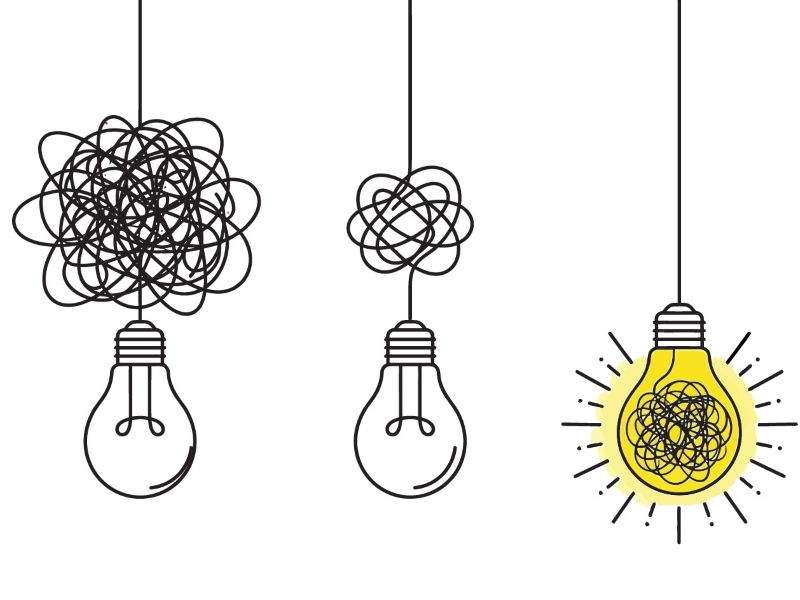
When we talk about distilling something down, we’re talking about reducing it to its essence. We take something made up of many parts and extract what matters most.
The aim isn’t to capture everything, but to remove what is extraneous or confounding so that what remains is useful and clarifying.
This is a valuable framework because we live in a world defined by complexity. Nearly any current event could justify an entire book explaining how it came to be.
Try to make sweeping statements about how things are or how they should be and we immediately run into exceptions and counterexamples. Try to include every caveat and the result becomes so long and convoluted that it loses its usefulness.
Fenced Out
When we talk about “setting boundaries” with someone, it almost never means things are going well.
We usually think about boundaries in the context of a social norm or expectation being violated. Boundaries are typically a response to behavior we find inappropriate.
But boundaries exist in every meaningful relationship. If a friend inserts herself into our life too much, we might talk about setting a boundary about when we want to interact. Because of this, our conception of boundaries is often synonymous with moving away from someone.
But boundaries are what let relationships stay stable enough to exist.

Reality Bites
Sometimes it’s not easy to accept reality. If we can’t face the fact that our bodies age, break down and die, we become surprised, angry and indignant when those things start happening.
If we can’t accept the beauty and the darkness of human nature, we will be disappointed and surprised by the generosity and cruelty of other people.
Why can’t we see things as they are?
There’s a whole body of research, a manifestation of confirmation bias, that shows our beliefs are stronger than our senses. We won’t believe our eyes when we see something that conflicts with our beliefs or opinions.
Help Yourself
Help Yourself Inward kindness sets a path to understanding By Dr. Justin Altschuler May 2026 I was recently talking to a patient who started smoking again. He quit cigarettes for a while, then resumed during a period of high stress. “Why the (blank) would I do this...