

Pocket Life
By Corky Mau
November 2026
Worldly Wise
Pocket resident finds balance between two cultures
Toshiko Nagahama Morris was a Japanese war bride who survived Tokyo firebombing and postwar hardship. As she approaches her 98th birthday, she considers Pocket her home and cherishes her Japanese culture.
“My mother has found a good balance that allows her to thrive in both worlds,” says Jessie Morris Jr., Toshiko’s oldest son and a former public defender in Sacramento and Yolo counties.
Toshiko was 13 when Japanese pilots attacked Pearl Harbor. With war underway, students in Tokyo were pulled from school to work in factories and farms. Toshiko was lucky to finish high school.
“My mother rarely talks about that time of her life,” Jessie Jr. says. “Under martial law, there was imposed food rationing. Food care packages were distributed. Her family boiled water because bombing raids destroyed Tokyo’s infrastructure. Electricity in the home was unstable and there were always threats of fire danger.”
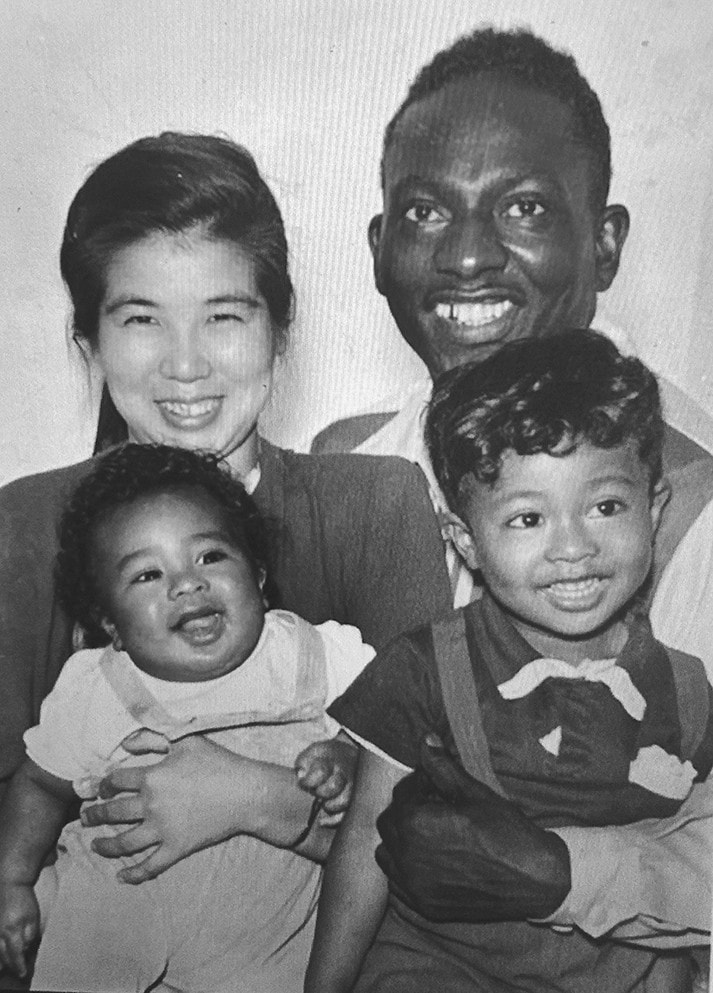

When the war ended and U.S. military arrived, Toshiko went to a USO event. An Army Air Corpsman named Jessie Morris asked her to dance. Romance followed. The couple fell in love.
The War Brides Act allowed U.S. servicemen to bring wives home. The process wasn’t easy. “To make sure we did things right, we got married two times,” Toshiko says.
The union drew objections from Toshiko’s father, but not necessarily because Morris was African American. “Other family members didn’t seem to object,” Jessie Jr. says. “The language and cultural gap were larger than any interracial marriage considerations.”
The family lived on military bases in Japan and stateside. Compared to many Japanese, Toshiko was fortunate. She says, “Civilian life was hard. People washed their clothes in creeks and water ditches. They walked or rode bicycles over gravel roads filled with potholes.”
The family grew. Jessie Jr. was born in Tokyo. Two younger brothers were born in Alaska and California. Toshiko embraced life as a military wife while befriending other Japanese brides.
Military life insulated the family from racial discrimination. “We always lived in base housing,” Jessie Jr. says. “The Air Force didn’t tolerate acts of racial discrimination. The Stars and Stripes newspaper reported race issues outside the base, but we never experienced it.”
The elder Morris retired from the military in 1967 and settled the family in Sacramento. Toshiko was determined her sons would have a better life than her experiences.
She stressed physical and mental health. She cooked healthy meals and mandated medical checkups. Everyone read the Bee and Newsweek.
“She ironed our judo outfits,” Jessie Jr. says with a laugh. “Maybe she thought we’d get stronger if our pants had a crease down the front.”

Toshiko ran a laundromat and worked at the McClellan Air Force Base Exchange. She retired at age 89. Her husband died in 1990.
Toshiko Morris turns 98 in November. For the last 75 years, her daily treat is one cup of American coffee. She might have two on her birthday.

VETERANS LUNCH
Military veterans are invited to Elks Lodge No. 6 for a celebratory lunch Saturday, Nov. 14, at 1 p.m. Former Marine John Patricio is the scheduled guest speaker. Free for veterans, $15 for others. Call (916) 422-6666 for reservations.
COOKIE DECORATING
Justine Cabanilla of Sugar Sweetery offers cookie decoration lessons Tuesday, Nov. 17, from 3:30–5 p.m. at Robbie Waters Library. Participants must be at least 18, with seating limited to 15 people. No registration required.
Corky Mau can be reached at corky.sue50@gmail.com. Submissions are due six weeks prior to the publication month. Follow us on Facebook and Instagram: @insidesacramento.