

Right Project, Wrong Place
Rio stadium improvements could spell disaster for wildlife
By Cathryn Rakich
November 2026
The lawn signs read “Light the Field.” Neighbors want to “light” Rio Americano High School’s sports stadium.
The problem: the proposed project would negatively impact the American River Parkway.
Rio Americano backs up to the parkway levee, steps from the bike trail, grassland and riparian habitat, the lower American River and its wildlife.
It’s not that the stadium doesn’t have lights. Evening practices and games are lit by portable diesel-powered LED lights. The school wants “improvements to the existing Rio Americano facilities.”
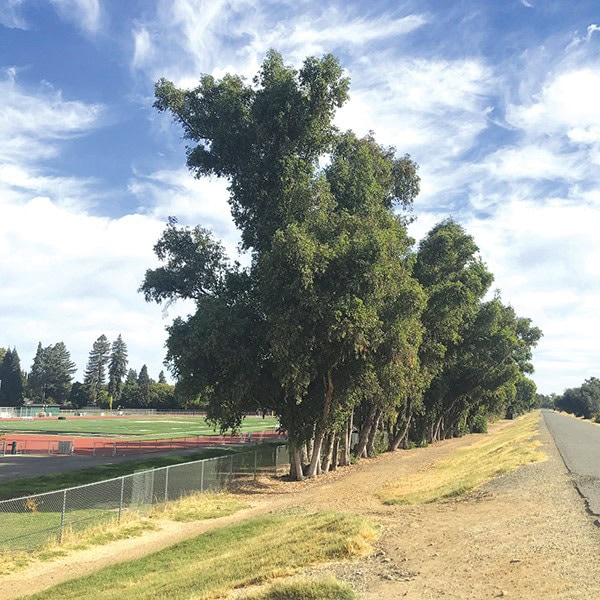
Improvements include installing four 80-foot-tall mast stadium lights, two on each side of the field. New bleachers would expand seating capacity from 288 to 2,575 people. An upgraded public address system would amplify broadcasts.
The draft Environmental Impact Report notes substantial new noise and light, and increased traffic from higher attendance at games. The proposed improvements would allow larger events, including five to eight football games, a graduation ceremony, school assemblies and other activities each year.
“Impacts on the neighborhoods would be substantial,” cites Save the American River Association. “Increased noise, traffic, lighting and visual intrusions would be significant and undermine the community’s quality of life.”
The association notes, “The Parkway is habitat for diverse wildlife and serves as a green corridor for ecological preservation. The introduction of a high-intensity sports facility presents a looming threat to the serenity and ecological integrity of this critical area.”
For wildlife, human-produced noise can cause stress, disrupt patterns, and interfere with prey and predators. Artificial light can cause disorientation and alter behavior.
During construction, the draft Environmental Impact Report notes potential perils to wildlife, including nesting birds, bats and northwestern pond turtles. Heavy machinery could damage elderberry shrubs resulting in “a potentially significant impact” to the threatened valley elderberry longhorn beetle.
The impact report lists mitigation measures to “avoid and minimize potential impacts during construction on special-status and other protected species.” But mitigation isn’t guaranteed.
Opponents to the stadium project are careful to focus on how increased light and noise would impact the parkway. Going up against young people and sports is tricky.
“It’s so easy for people to line up on one side or the other, believing it’s an either/or situation,” says Betsy Weiland with Save the American River Association.
“When we speak directly to people, explaining the school’s location adjacent to the American River Parkway and impacts from a use as intense as the stadium/events center, we get immediate support 99% of the time,” Weiland adds.
Rio currently holds large events 3 miles away at El Camino High School’s stadium, equipped with high-mast lighting and seating for 3,000 people.

“There is an alternative that preserves football and all of the fun things associated with it for the Rio students, and protects our wild and scenic river,” Weiland says. “Continue to play at El Camino High School and dedicate whatever part of $10 million it costs to build a new stadium/events venue to improving the El Camino High School stadium.”
Weiland adds, “Simply put, it’s a right project in the wrong place. Sometimes we have to remember we are part of something much bigger than ourselves, larger than the moment.”
Kids move on after four years or less. The parkway and its wildlife will be here forever if we choose to protect it.
San Juan Unified School District Board of Education will consider and potentially approve the final Environmental Impact Report on Nov. 17. For information, visit sarariverwatch.org under “Our Work” or www.sanjuan.edu and search “Rio Americano Stadium Project.”
Contract 3B Update: At press time, a U.S. district court had not ruled on a lawsuit to halt the Army Corps of Engineers’ erosion-control project along the lower American River.
Cathryn Rakich can be reached at cathrynrakich@gmail.com. Follow us on Facebook and Instagram: @insidesacramento.