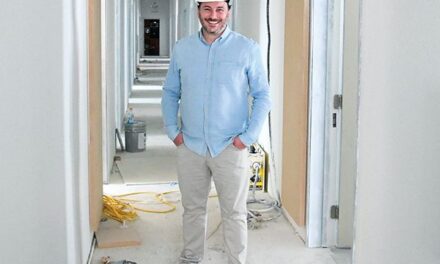


Mark Friedman and Julie Young, two developers known for stylish urban apartments, found a formula to provide affordable housing that’s truly affordable.
Using a strategy Friedman says can be replicated when economic conditions are right with low interest rates and reasonably priced materials, he and Young built 350 “attainable” apartments in Sacramento and West Sac for about $77 million, or $220,000 per unit. Monthly rents start at below $1,500.
The partners use the term “attainable” rather than “affordable” because government-sanctioned affordable housing typically carries strict requirements that can triple the cost of comparable units built by Friedman and Young.
Among those requirements is paying prevailing wages for labor.

Friedman and Young market their units to renters with 80% of median income or less, under the brand “KIND.” As in: KIND Downtown at 1901 Eighth St., KIND West in West Sac and KIND South near Florin Road.
For what Friedman and Young spent, local governments that struggle to build affordable places for homeless people could buy the apartments, finance mental health and other transition services, and still come out ahead.
“There isn’t a single silver bullet out there that can make this work,” Friedman says. “But there are a lot of silver BBs that, when you combine them, can have a big impact.”
Friedman and Young put together a list of about two dozen factors that inflate housing costs. They worked to solve as many as they could.
By avoiding sanctioned affordable housing programs, they saved about 30% on labor. Negotiating with government planners so developer fees for parks, schools, streets and other services are assessed on square footage rather than units cut thousands of dollars.
The bottom line shrank even more when the builders limited their fees to 2% to 3%. Affordable housing developers often charge up to 20% fees to compensate for lower profits when they rent units below market rate.
“By asking ourselves how big do these apartments need to be, and designing them like the inside of a boat, where every inch is precious,” Friedman says, building costs receded again.
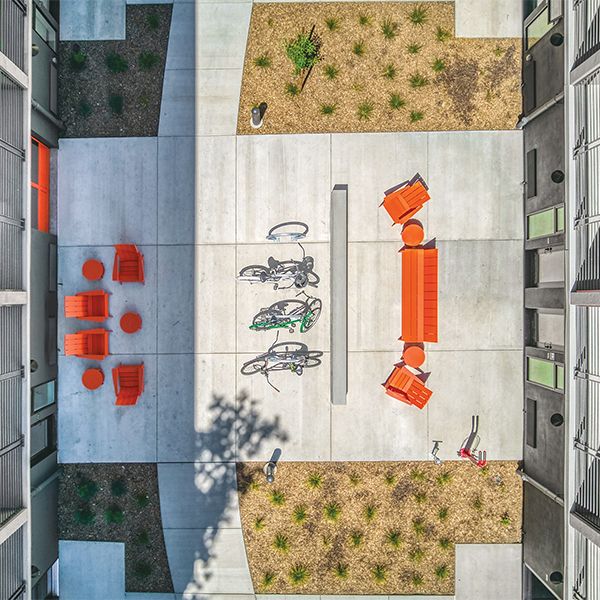
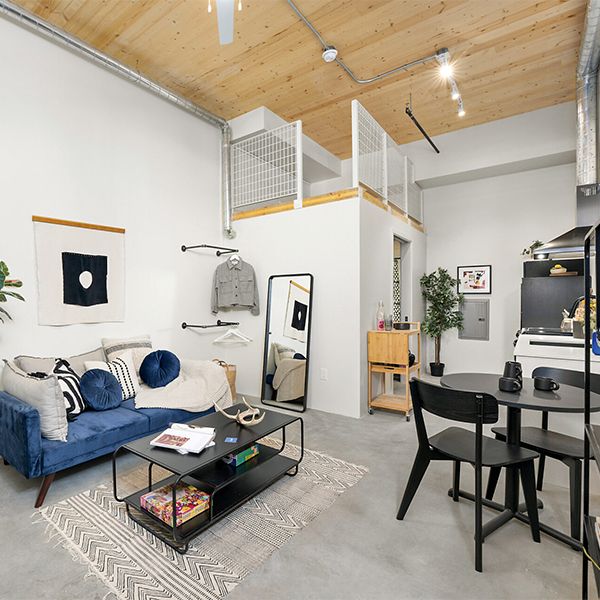
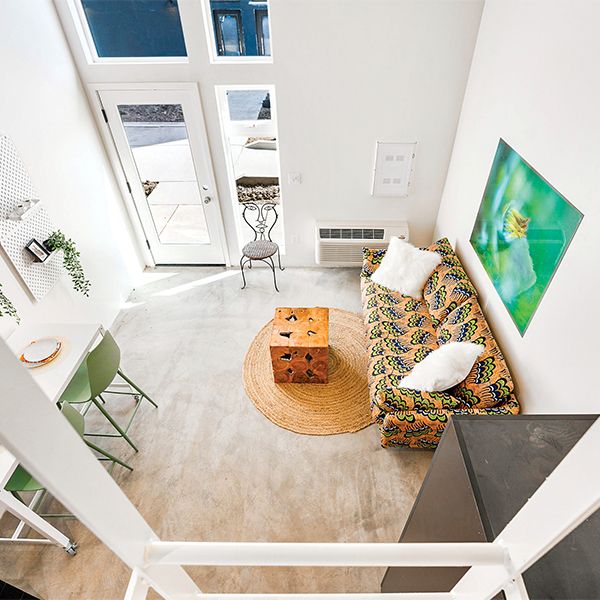
The first units in West Sac rented for $1,200 a month soon after they opened in 2022. Friedman and Young projected a modest profit with about 90% occupancy. KIND West sold out in 45 days.
“We’ve really been aiming at the workforce person who works at, say, Starbucks and can’t afford $2,200 a month for a one-bedroom apartment,” Friedman says.
Young felt compelled to provide relief for workers earning less than the median income even before COVID made finding affordable places difficult. Friedman was similarly motivated but had something bigger in mind.
“What I wanted to do was demonstrate that the numbers worked because if they did, other people would repeat it and we would have something to contribute to solving the housing problem,” he says.

“This was not a charitable exercise. It was an attempt to demonstrate that it was possible for smart development to have the market solve the problem.”
Friedman notes John Vignocchi, another innovative local developer who figured out how to lower his costs, produced a similar number of attainable units. But with higher interest rates, supply chain issues and inflated costs, it’s harder to make such projects work financially.
For now, Friedman is “pausing” on new KIND projects. He’s frustrated by politics that hinder affordable apartments.
When he and Young worked on their three KIND projects, Friedman participated in a housing workshop at the Capitol.
“When I laid it out, everybody was really excited until it got to the question of not paying prevailing wage,” he says. “They said they couldn’t possibly do that. They didn’t want to set a precedent.
“But this is not about ideology and politics. It’s about trying to solve a problem and if you look at it with clear eyes you can see that there are definitely political constituencies who have leaned on the Legislature to create a favorable playing field, and in this case it’s labor. They have created a very favorable playing field that has made it more difficult to solve our housing problem.”
Politics aside, if we truly want affordable housing, we need more innovative developers, such as Friedman and Young—developers willing to buck the usual way of doing things.
Gary Delsohn can be reached at gdelsohn@gmail.com. Follow us on Facebook, X and Instagram: @insidesacramento.