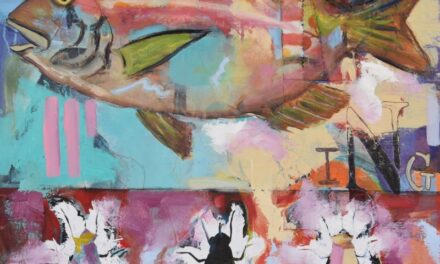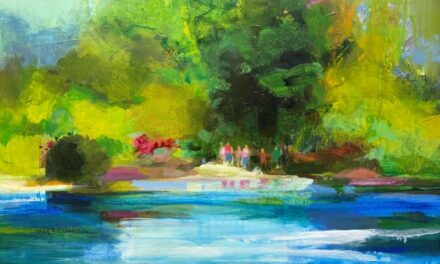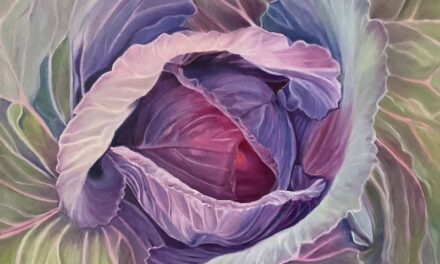


For Luis-Genaro Garcia, art is more than pretty pictures. It’s social. It’s political. And everyone should see themselves reflected in it.
“As a teacher, I wanted to change the (school) experience for students who are creative,” the Sacramento State University associate art professor says. “So I started developing projects where students were not only going to see themselves but also be able to make connections to what’s going on in their own communities.”
The process of linking classroom learning with activism and community is a hallmark of Garcia’s academic work and the foundation of his doctorate from Claremont Graduate University.

“As an artist, I knew I had a unique approach to teaching,” Garcia says. “As a teacher, I had a unique way of putting art together with my own pedagogical process. I wanted to give a name to what I was doing. The concept is called Creative Resistance. This name was already mentioned by other scholars, but they didn’t show an example of it in practice. It was all conceptual.”
Garcia put concept into practice. He invited students to share about the art they see in their communities.
“If I want to teach them about art, they have to learn about art that exists in their homes,” he says.
Garcia did something similar while developing his own art practice.
“I focused on imagery that reflected my own cultural and communal knowledge—people or things I saw on the street where I lived,” he says. “I started embracing my cultural and ethnic background a lot more and focused on Día de los Muertos imagery.”
Garcia taught high school in Los Angeles for 14 years, earned a master’s in public art from USC and finally his Ph.D. Then serendipity stepped in.
His wife got a job at Sac State while pregnant with their first child. The university also had an opening for an arts educator. Garcia applied.


Researching Sac State for his interview, he came across a 2002 syllabus for a class called Barrio Art.
“I thought, wow, this is what I’m doing!” Garcia says. “This is the type of engagement I want as a professor.”
The class was started by the Royal Chicano Air Force, the art collective founded in the 1970s by local professors, including José Montoya, Esteban Villa, Juanishi Orosco, Rudy Cuellar and Ricardo Favela.
It hadn’t been taught in 20 years. Garcia pitched resurrecting the class as part of his interview and got the job. The Barrio Art program returned in 2023.
As part of the class, Garcia’s students attend exhibitions—such as the recent lowrider exhibit at California Museum—and work with young people in partnership with Washington Elementary School.
His students will be part of the University Galleries exhibition, “Painting La Comuniversidad: Three Murals of the Royal Chicano Air Force,” open through May 1. The exhibition features large-scale reproductions of key Royal Chicano Air Force murals, plus original drawings, activist posters and archival materials.

Connecting art, education and community got Garcia noticed at the national level. He recently received the Higher Education Art Educator of the Year award from the California Art Education Association.
“To me, this work is speaking for itself,” he says.
For information on “Painting La Comuniversidad,” visit csus.edu/university-galleries. For information on Garcia, visit luisgenarogarcia.com and @barrioprofe on Instagram.
Jessica Laskey can be reached at jessrlaskey@gmail.com. Follow us on Facebook, X and Instagram: @insidesacramento.