

At age 80, Sacramento artist Suzanne Adan still delights in unsettling people gently, mischievously and with wit and humor.
Her retrospective exhibition, “I’m No Spring Chicken,” through Oct. 11 at the Crocker Art Museum, celebrates a career that spans five decades and establishes Adan as one of the region’s most important artists.
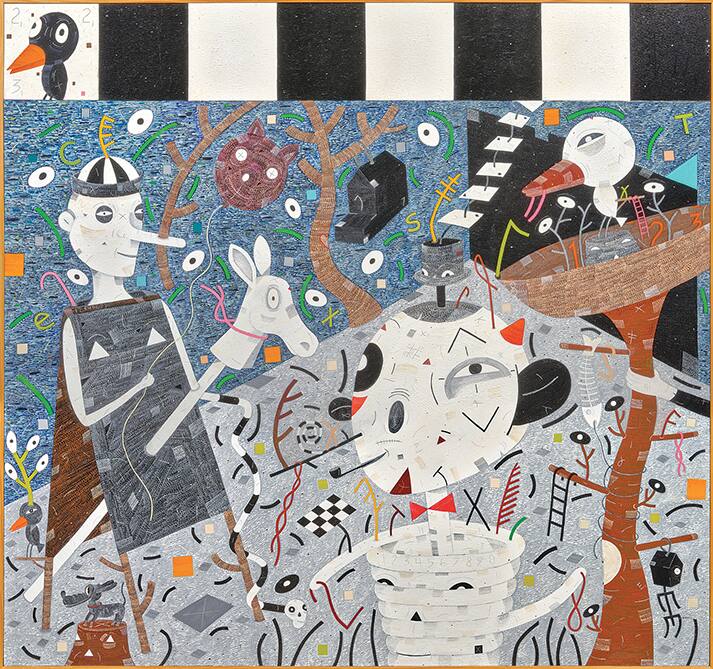
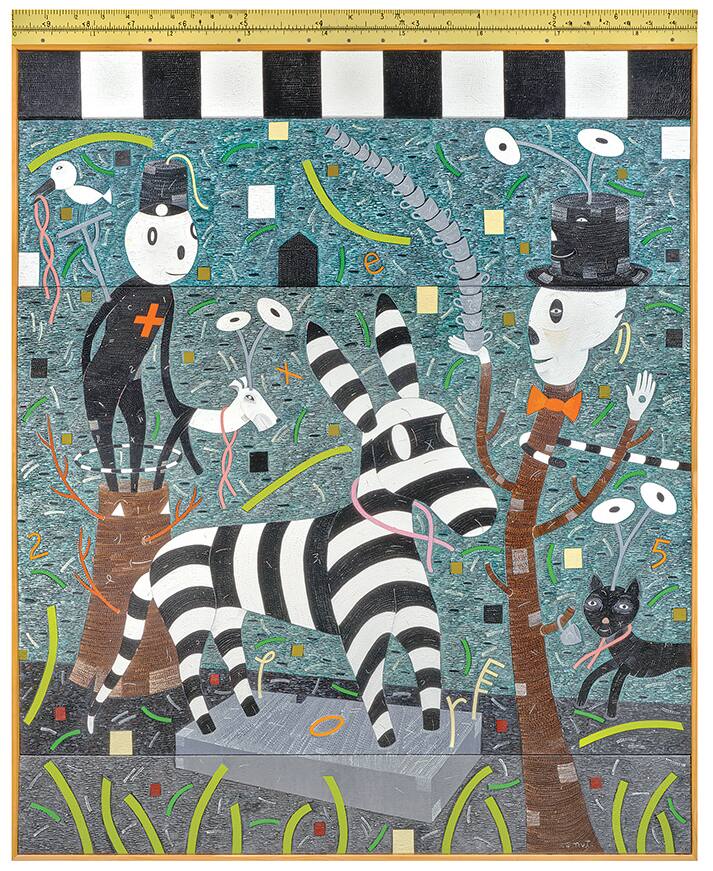
Adan’s work is instantly recognizable to those who follow Northern California’s art masters. Her whimsical figures—toy-like children, black birds, dogs, cats and strange hybrid creatures—inhabit dreamlike worlds filled with letters, numbers, polka dots and cryptic symbols.
At first, her paintings feel playful and nostalgic. Look longer and complexities emerge: loneliness, sexuality, anxiety, memory and the transition from childhood innocence to adulthood.
Creative tensions defined Adan’s work from the start.
Born in Woodland in 1946 and raised in the agricultural village of Yolo, Adan grew up in what she describes as quintessential small-town California. During the 1940s and early 1950s, Yolo had about 300 residents. The rhythms of rural life marked her imagination.
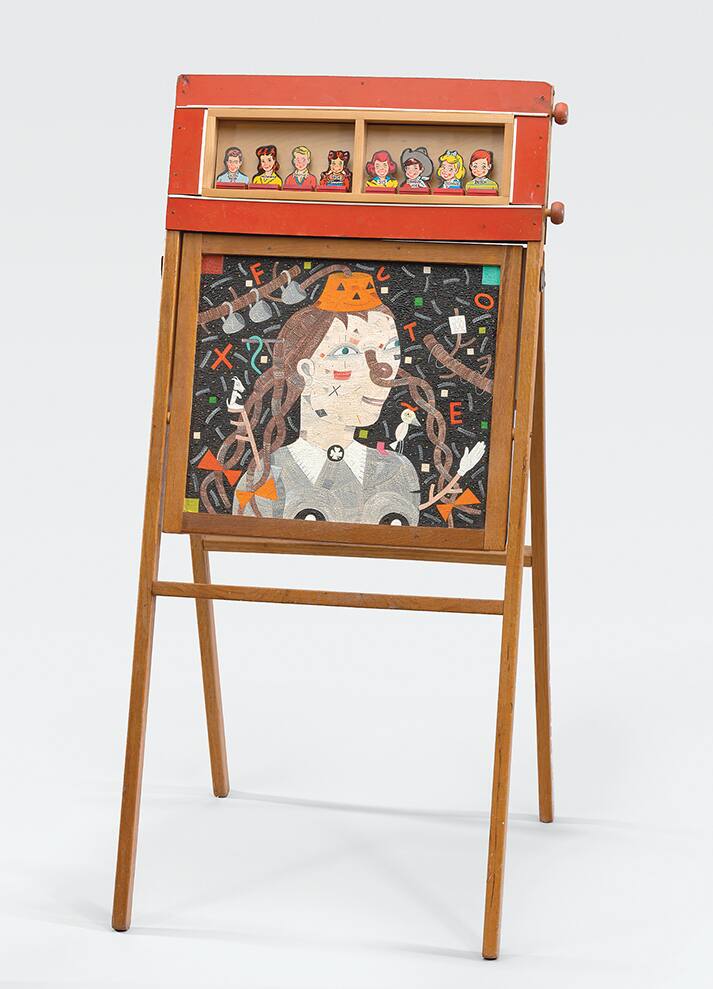
Those early experiences echo through Adan’s paintings today. Children with braids and bows. Schoolhouse imagery. Pets, toys and fragments of Americana filtered through an adult sensibility both funny and unsettling.
The exhibition features more than 100 paintings, prints, drawings and ceramic sculptures that reveal a personal, visual language shaped by childhood memories, dark humor, vintage Americana and sly social commentary.
Adan studied at Sacramento State College, earning bachelor’s and master’s degrees in art. At school she met her husband, sculptor Michael Stevens, and developed the visual vocabulary that would become her signature.
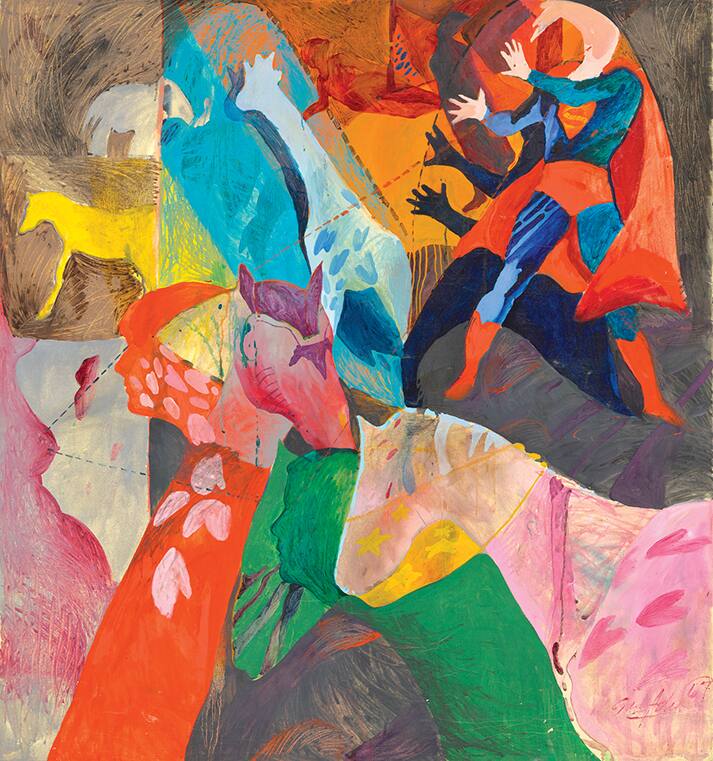
Her early breakthrough came during graduate school in the late 1960s when she combined images associated with women and domestic life with satire, sexual innuendo and humor. An early work, “Panty Hose,” juxtaposed magazine imagery with painted undergarments and visual puns that challenged traditional ideas about femininity.
Her works found an audience at the Candy Store Gallery, which operated from the 1960s through the 1990s. Adan exhibited alongside Northern California Funk artists and members of Chicago’s “Hairy Who” movement.
“Though often associated with the irreverent Funk movement, Adan’s work has always occupied its own singular territory,” says Scott Shields, curator of the Crocker exhibit. “Folk art, outsider art and craft traditions all shaped her approach.
“One of her most recognizable stylistic elements—small, stitched-looking brushstrokes—grew partly from her childhood love of sewing through 4-H and from an early encounter with a Vincent van Gogh painting.”
Vintage toys collected by Adan and Stevens became recurring influences. Their exaggerated innocence and graphic simplicity appear throughout her work, often transformed into psychologically charged characters.

Animals also populate Adan’s universe. Dogs and cats inspired by beloved pets appear frequently, sometimes memorialized after death. Black birds hover through many works, playful yet faintly ominous.
Her paintings reward close viewing. Letters and numbers become hidden puzzles. Decorative patterns transform into coded autobiographical clues. The imagery references personal experiences, though viewers don’t necessarily need to decode every symbol to appreciate the emotional pull.
Among the exhibition’s centerpiece paintings is “Cabin Number Seven,” a large-scale work inspired by the 27 consecutive years Adan and Stevens vacationed at Sardine Lake in the Tahoe National Forest. They always stayed in the same cabin.
The painting overflows with visual invention: birds nesting in boats, ladders hanging from trees, fish skeletons, cottages and strange anthropomorphic figures scattered through a dense field of color and pattern. The scene feels joyous yet haunted—a summary of Adan’s artistic world.
“What makes Suzanne Adan remarkable is not simply the longevity of her career, but the consistency of her vision,” Shields says. “For more than 50 years, she has remained committed to making deeply personal work that resists trends and easy categorization.”
For information, visit crockerart.com.
Cecily Hastings can be reached at publisher@insidepublications.com. Follow us on Facebook and Instagram: @insidesacramento.