

Boiled, Not Savored
Minimizing ideas means losing the flavor
By Dr. Justin Altschuler
August 2026
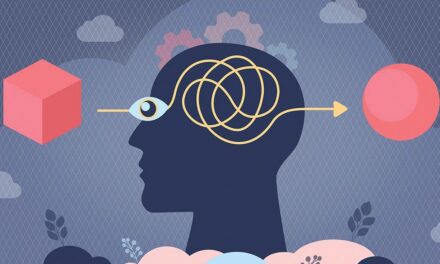
When we talk about distilling something down, we’re talking about reducing it to its essence. We take something made up of many parts and extract what matters most.
The aim isn’t to capture everything, but to remove what is extraneous or confounding so that what remains is useful and clarifying.
This is a valuable framework because we live in a world defined by complexity. Nearly any current event could justify an entire book explaining how it came to be.
Try to make sweeping statements about how things are or how they should be and we immediately run into exceptions and counterexamples. Try to include every caveat and the result becomes so long and convoluted that it loses its usefulness.

Thinking through the lens of distillation helps us orient ourselves amid that overload. Like any framework, it has limits.
Distillation isn’t good at preserving nuance. What it excels at is helping us navigate chaos—situations where there’s too much information, too many details, too many competing signals to hold all at once.
In this context, we need a guide, a heuristic to help us navigate through the noise toward what matters most.
By definition, distillation begins with excess. We start with more information than we need and gradually remove what is less essential. This cannot be shortcut.
If we start with limited information and try to simplify, we’re not really developing useful learning or focusing on what’s important. We’re just dumbing down.
Earned simplicity requires learning broadly and deeply and only then digesting what we’ve learned down into what is most critical.
In a culture that rewards speed and confidence, it’s tempting to skip that process. We arrive at conclusions early and label them “distilled wisdom.”
But extracting a “key takeaway” from shallow contact with a subject isn’t distillation—it’s premature certainty. That kind of certainty is rewarded with clicks, likes and views, but it rarely endures.
It mistakes confidence for understanding and collapses complexity before we’ve had meaningful contact with the contradictions, exceptions and edge cases that actually matter.
I worry about this in the context of watching short-form video rather than movies or reading tweets rather than books. The former might be able to capture similar emotions or present pithy understandings, but they are someone else’s simplicity. There is a famous zen koan, “If you see the buddha, kill the buddha.”

It’s a strange phrase, a warning against trusting received wisdom at the expense of what we ourselves must learn and discover to be true.
Dr. Justin Altschuler, a physician certified in family practice and addiction at Sequoia MD, can be reached at (916) 668-7164. Previous columns can be found and shared at InsideSacramento. Follow us on Facebook and Instagram: @insidesacramento.