

Coyote Calling
Wildlife photographer campaigns for canine coexistence
By Cathryn Rakich
September 2026
The large plastic bin holds everything coyote. Color brochures and door hangers, binders with Power Point presentations, a paw print casting, faux fur, teeth and scat.
The contents are Guy Galante’s arsenal to talk about his favorite subject: coyotes.
The Carmichael native is a local naturalist, educator and wildlife photographer. Some people call him a coyote specialist, but he admits to no formal training in the species, “other than 20 years of boots on the ground,” Galante says. “Coyotes teach you everything you need to know.”
Galante’s fascination with coyotes began while working at Gold River Elementary School. He taught kids about the flora and fauna of the American River Parkway using a book of black and white drawings. He wanted to create a color photo version of the book.
About a year went by. No coyotes. “I just wanted one picture of a coyote,” he says. “I started doubting there were any.”
Then it happened. Sept. 4, 2005, Galante shot his first coyote photo on the parkway behind the Sacramento County Sheriff’s academy.
“The coyote had just stepped off the levee and I got it running by in full stride,” he says. “The feeling was incredible.”
Galante showed the photo around the school’s breakroom. “I was so excited. It was like dopamine. I wanted that again.”
Today, he has more than 150,000 photos of coyotes.
He spotted that first coyote at the same location for three more years, recognizing him by certain features. Each coyote is unique. Some have scars on their noses, nicks in their ears, variations of eye color. One he calls Zelda has a canine tooth that hangs below her lip.
Galante last saw Zelda in 2025 near the golf course at Ancil Hoffman Park. She had five pups and “pretty bad mange,” he says. “They always look a little raggedy after giving birth. Plus the pressure from all the people and dogs.”
In 2008, Galante began photographing as many of the species as he could. The coyotes know him. He wears basically the same clothes and carries the same camera. He says the coyotes “tolerate” him. He’s never been in a position where he felt unsafe.
Nine years ago, Galante spotted coyote pups nibbling blackberries in a thicket at William B. Pond Recreation Area. “I probably took 2,000 pictures of those coyotes doing what puppies do. So damn cute,” he says.

Photo courtesy of Guy Galante
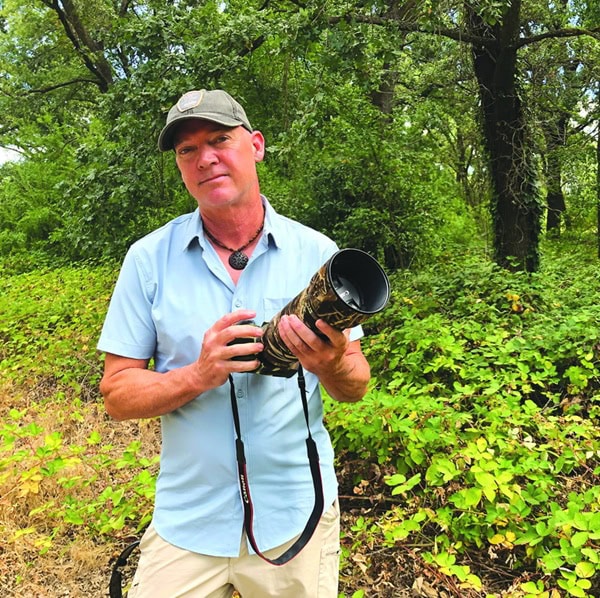
Photo courtesy of Guy Galante
Soon after, a friend reported a dead coyote. “It was definitely one of those pups,” Galante says. The discovery gave him a chance to get up close. Take photos of the feet. Look at the claws. Pull up the gums.

There were no signs of trauma. No gunshot wound. No blood. No bite marks.
Galante called the California Department of Fish and Wildlife. A necropsy confirmed the pup died by ingesting rat poison.
“I was pissed,” Galante says. “People have no idea that the poison in their backyard is killing more than rats. And they wonder why there are no owls and hawks like there used to be.”
Sacramento has its share of urban and suburban coyotes. In neighborhoods, they seek out fallen fruit and nuts, vegetables, compost with food scraps, insects, lizards and pet food.
Western coyotes weigh 10 to 30 pounds, have dense silver/gray/brown fur, pointed ears and bushy, black-tipped tails. They live alone, in pairs or family groups, and maintain territories from 2 to 30 square miles.
As scavengers they provide an ecological service by keeping rodent populations in check.
Breeding peaks in February and litters of four to eight pups are born in April and May. Coyotes are devoted parents, resourceful, intelligent and social. They have a dozen vocalizations for communicating with each other.
In 2017, Galate became a wildlife educator with Project Coyote, a national organization promoting compassionate coexistence between humans and carnivores. He’s the project’s “go-to person” when there’s a coyote problem in Sacramento County.
With his arsenal of coyote-related props, Galante attends neighborhood meetings and community gatherings, including events at Effie Yeaw Nature Center.
“I’m a coyote photographer. It is my absolute passion in life,” Galante says. “I can be sitting at my desk and I have this feeling. I just need to go to the river. I drive to the parking lot and there’s a coyote waiting for me.”
For information, visit projectcoyote.org.
Cathryn Rakich can be reached at cathrynrakich@gmail.com. Follow us on Facebook and Instagram: @insidesacramento.
Keeping Coyotes Wild
As the natural environment shrinks, wildlife seeks water, food and shelter in neighborhoods. But most coyotes are wary of humans.
“People think coyotes are going to attack them,” naturalist Guy Galante with Project Coyote says. “You are in much more danger of a domestic dog attack than a coyote.”
Coyotes can be encouraged to leave neighborhoods with hazing: Make eye contact. Yell. Wave your arms. Jump up and down. Blow a whistle. Bang a pot. Open and close an umbrella. Don’t stop until the coyote retreats.
More important tips:
• Walk dogs on short leashes.
• Keep cats indoors.
• Never feed wildlife.
• Don’t store or leave pet food outside.
• Clean around birdfeeders.
• Secure garbage cans and composting bins.
• Remove fallen fruit and nuts from the ground.
• Thin vegetation that can be used as a den.
• Install motion-activated lights and sprinklers.
• Add reflective mylar or rolling PVC on top of fences.
• Close off spaces under porches and sheds.
Call 311 to report coyotes who are sick or injured. Trapping and relocating wildlife without a permit is illegal in California.